
“Design is not just what it looks and feels like. Design is how it works.” — Steve Jobs
In the bustling urban landscape of Bangladesh, particularly in densely populated cities like Dhaka and Chittagong, the concept of home has evolved. It is no longer just a shelter; it is a sanctuary from the traffic, noise, and humidity outside. Recently, the interior design industry has been climbing the ladder of consumer needs, moving from a luxury for the elite in Gulshan and Banani to a necessity for homeowners across Uttara, Mirpur, and Dhanmondi.
However, as this industry gains popularity, it brings with it a host of misconceptions. Many homeowners in Bangladesh hesitate to engage professional help due to myths about cost, utility, and process. They often rely on unverified advice or traditional methods that may not suit modern living standards.
At DIT Studio, we believe that knowledge is the first step toward a beautiful home. Whether you own a compact flat in Mohammadpur or a duplex in Bashundhara Residential Area, understanding the reality of interior design is crucial. Let’s explore and debunk the most common misconceptions about the interior design industry in Bangladesh.
Myth 1: A Contractor (or Local Mistri) Can Function as a Designer
One of the most pervasive misconceptions in Bangladesh is that a general contractor or a local head mason (Raj Mistri) can replace a professional designer. The rationale is often financial: homeowners assume that hiring a contractor directly cuts out the “middleman” and saves money.

The Reality: Technical Expertise vs. Execution
While a contractor is skilled at executing tasks—laying tiles, building walls, or painting—they rarely possess the holistic vision required for home interior design in Bangladesh. A contractor may follow instructions, but they lack the training to optimize flow, lighting, and ergonomics.
- The Cost of “Cheap” Labor: To cut down on the initial budget, unskilled contractors often suggest low-grade materials that look good initially but fail quickly in our humid climate.
- The “Renovation Loop”: Without a proper design plan, you may find yourself moving electrical sockets after the walls are painted or realizing a wardrobe door blocks the fan. These rectifications cost significantly more than hiring a designer upfront.
- Material Knowledge: A professional designer knows the difference between commercial plywood and marine plywood—crucial knowledge for a country with high humidity and monsoon dampness.
Myth 2: Interior Design is Only for Large, Luxury Spaces
There is a widely spread misconception that interior design is reserved for sprawling villas or large commercial offices. Many flat owners in Dhaka believe their 1,200 or 1,500 square foot apartments are “too small” to warrant a professional design.
The Reality: Small Spaces Need Design the Most
In reality, the smaller the space, the more critical the design becomes. The main purpose of interior design is to maximize space in any given layout. In a city where real estate prices are skyrocketing and square footage is limited, wasting even a single foot of space is a luxury most cannot afford.
- Spatial Planning: Interior designers study spatial planning and space management. For a compact apartment in Segunbagicha, this might mean designing vertical storage units that draw the eye upward, making the room feel taller.
- Multi-functional Solutions: Designers can create custom furniture that serves dual purposes—like a dining table that folds away or a partition that doubles as a bookshelf—ensuring your home is clutter-free.
- Visual Expansion: Through the strategic use of mirrors, lighting, and color palettes, a kitchen interior design in Bangladesh can be transformed from a cramped cooking corner into an airy, functional workspace.
Myth 3: Interior Designers Just Play with Fabric Swatches
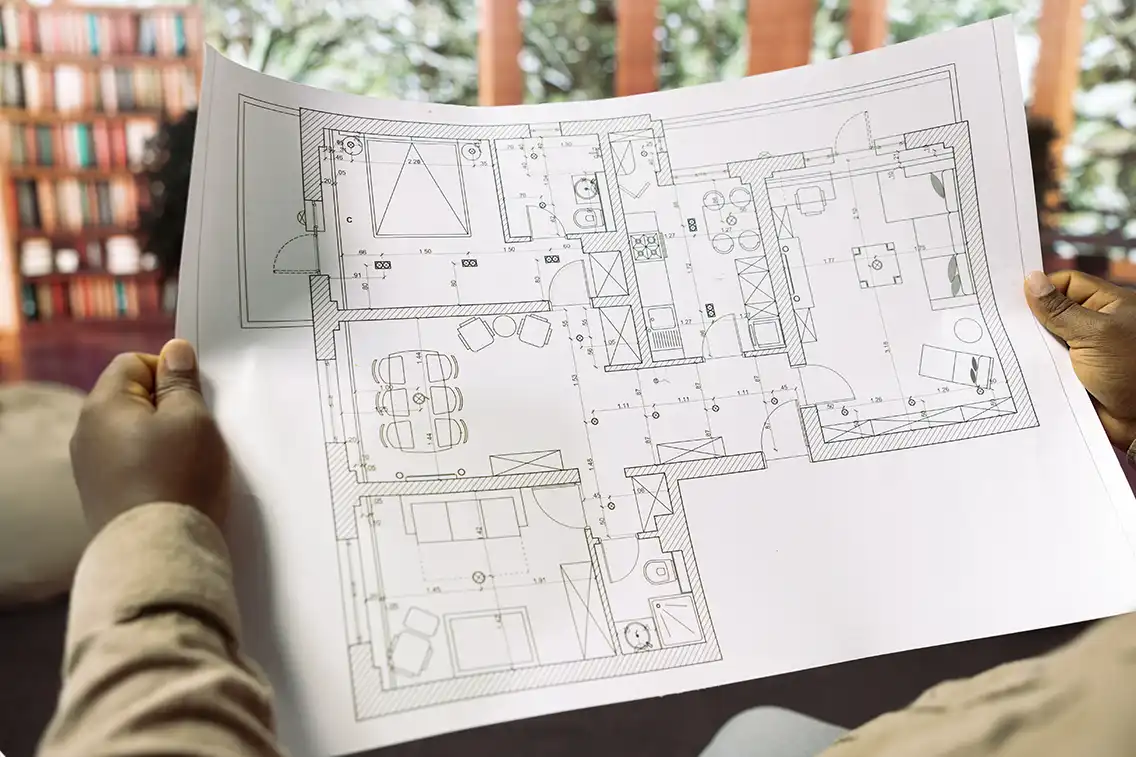
A common stereotype portrays interior designers as decorators who spend their days picking out throw pillows, matching curtain fabrics, and shopping for vases. This trivializes a profession that is deeply rooted in technical skill and project management.
The Reality: It is a Science, Not Just Art
Interior design is a complex blend of art and science. While aesthetics are important, they are the final layer of a much deeper process.
- Project Management: Designers collaborate with architects, electricians, plumbers, and carpenters to ensure the project is completed on time. They act as the single point of contact, saving you the headache of coordinating five different vendor teams.
- Building Codes & Safety: Professional designers in Bangladesh are familiar with local building regulations. They ensure that your electrical load calculations can handle your ACs and appliances, and that fire safety protocols are observed in the layout.
- Material Selection: Beyond fabrics, designers select flooring that withstands wear and tear, kitchen countertops that resist turmeric stains, and paints that are anti-fungal—vital for the Bangladeshi climate.

Myth 4: Designers Will Impose Their Own Vision on You
Some homeowners worry that hiring an interior design firm means losing control over their own home. They fear the expert will treat the house as a portfolio piece, ignoring the family’s personal style and needs.
The Reality: Collaboration is Key
Professional interior designers are flexible and adaptable. At DIT Studio, we operate on the principle that the design must reflect the client’s personality, not just the designer’s portfolio.
- Tailored to Taste: Whether you prefer a minimalist, contemporary look or a traditional setup with intricate woodwork and warm tones, a designer creates a space that meets your vision.
- Cultural Sensitivity: In Bangladesh, homes often have specific cultural requirements—such as a designated prayer space, a hand-washing area near the dining room, or a drawing room separate from the private living quarters for guests. A professional designer integrates these cultural nuances seamlessly into the modern layout.
- Listening First: The process begins with understanding your lifestyle. Do you host large family gatherings? Do you need a child-proof environment? The design is built around your life.
Myth 5: Interior Designers Are Only for the Wealthy
Perhaps the most damaging myth is that interior design is an indulgence for the ultra-rich. While it is true that luxury design exists, the industry has democratized significantly.
The Reality: Design for Every Budget
Interior design is about value engineering. It is gaining popularity among all classes of people in Bangladesh because it provides a roadmap to spending money wisely.
- Budget Management: A designer helps you allocate your budget where it matters most. They might suggest spending more on high-quality hardware for kitchen cabinets (which get daily use) while saving on decorative items that can be upgraded later.
- Access to Resources: Established firms have relationships with vendors and suppliers, often securing better rates for materials like tiles, glass, and wood than a regular consumer could get from the retail market.
- DIY Assistance: For those with tighter budgets, designers can provide consultation services, offering guidance on layouts and color schemes while allowing the client to manage the purchasing and labor.
Myth 6: Interior Designers Are the Same as Decorators
The terms “interior designer” and “interior decorator” are often used interchangeably in Bangladesh, but they refer to distinctly different professions.
The Reality: Education vs. Aesthetics
- Interior Decorators: Focus primarily on the aesthetic appearance—furnishing, accessories, and paint. They step in after the structural work is done.
- Interior Designers: This is a profession requiring formal education and training. Designers are involved from the initial concept to the final installation. They consider structural changes, moving walls, electrical layouts, plumbing points, lighting plans, and acoustics.
For a comprehensive renovation that involves changing the layout of a bathroom or opening up a kitchen, you need the technical expertise of a designer, not just a decorator.
Myth 7: The “More is Better” Mindset
In a culture that often values abundance, many people believe that interior design is about adding more—more furniture, more showpieces, more heavy curtains. They assume designers will try to fill every corner.
The Reality: Less is More (Especially in Dhaka)
Modern design, particularly in urban Bangladesh, is ruled by “less is more” principles. With residential areas shrinking, overcrowding a space makes it feel claustrophobic and stressful.
- Breathable Spaces: Designers use their spatial awareness to leave “negative space,” allowing the room to breathe. This improves ventilation and natural light flow, which is essential for mental well-being.
- Quality over Quantity: Instead of three bulky sofas that block the walkway, a designer might suggest a sleek L-shaped sectional and a statement armchair.
- Functional Minimalism: This doesn’t mean the house looks empty; it means every object serves a purpose. Hidden storage solutions are a hallmark of good design, keeping daily clutter out of sight.
Myth 8: You Can’t Use Bold Colors in Small Flats
There is a fear that bold colors will make a small Bangladeshi apartment look even smaller and darker. As a result, many homeowners stick to “safe” off-white or cream walls throughout the entire house.
The Reality: Strategic Color Psychology
While neutrals are excellent for reflecting light, abandoning color entirely can make a home feel sterile and clinical.
- The 60-30-10 Rule: Designers often recommend using neutral colors for 60% of the room (walls), a secondary color for 30% (upholstery), and a bold accent color for 10% (cushions, art, or a feature wall).
- Depth and Personality: Dark or bold colors, when used correctly—for example, in a foyer or a powder room—can add incredible depth and sophistication.
- Lighting Matters: A bold color can look fantastic if the lighting design is correct. Designers understand how artificial light interacts with paint pigments to create the right mood, day or night.
Technical Knowledge: The Hidden Backbone of Design
We briefly touched on this, but it deserves its own section. Interior design is rarely just about “looks.” In Bangladesh, specific technical challenges require professional oversight:
- Damp Proofing: One of the biggest enemies of interiors in Bangladesh is salt and dampness in walls. A designer knows which treatments (like chemical waterproofing or PVC paneling) are necessary before aesthetic work begins.
- Electrical Planning: With the increasing number of gadgets in a modern home, standard developer-provided electrical points are rarely enough. A designer plans for concealed wiring, heavy-duty points for kitchen appliances, and mood lighting.
- Acoustics: In noisy neighborhoods, using materials that absorb sound (like specific curtains, rugs, or wall panels) can significantly improve the tranquility of your home.
Why Professional Design is an Investment, Not an Expense
It is not the client’s fault that they have so many misconceptions about interior design. These myths are the result of a lack of awareness about the profession and its purposes. Also, myths spread more rapidly than the truth.
However, hiring a trusted interior design company in Bangladesh serves as an investment in your property’s value and your family’s quality of life. A well-designed home has a higher resale value and rental potential. More importantly, it provides a functional environment that supports your lifestyle, reduces stress, and fosters connection.
At DIT Studio, we strive to bridge the gap between technical complexity and aesthetic beauty. We understand the local market, the climate challenges, and the cultural nuances that make a Bangladeshi house a home.
Conclusion
The journey to a dream home shouldn’t be paved with stress, budget overruns, and functional errors. By debunking these myths, we hope to empower you to make informed decisions. Whether you are looking to renovate a single room or design a commercial complex, remember that design is about problem-solving.
Don’t let misconceptions hold you back from creating a space that truly works for you. Start planning, prioritize functionality, and consult with experts who can turn your vision into a durable, beautiful reality.